Jamaican Food Classics That Everyone Should Experience


Jamaican food has a way of announcing itself before it reaches the table. You catch pimento smoke from a roadside drum, the sweet warmth of coconut simmering into rice, the deep savory note of browning in a pot of stew, and suddenly appetite feels less like hunger and more like anticipation. Few cuisines create that kind of sensory build-up so consistently. Even when the ingredients are humble, the finished dish rarely feels modest. Jamaican cooking leans on seasoning, patience, heat, and contrast, and it turns everyday staples into food people remember years later.
What makes the cuisine especially compelling is that it does not fit neatly into one category. It can be fiery, comforting, celebratory, rustic, elegant, and practical all in the same meal. African techniques and ingredients, British colonial influence, Indian curries, Chinese migration, Spanish traces, and indigenous knowledge all shaped the table. The result is not a fusion trend or a restaurant concept. It is a living cuisine with its own internal logic, built over generations and sharpened by home cooks, market vendors, fishermen, bakers, and street-side grill masters.
For anyone getting to know Jamaican food for the first time, a few dishes come up again and again for good reason. They are not just famous. They carry the flavor memory of the island.
Jerk, the dish most people know and the one many still misunderstand
If someone says Jamaican food and you picture jerk chicken, that is not a bad place to start. It is, however, an incomplete one. Real jerk is more than spicy grilled meat. It is a method, a seasoning profile, and a style of cooking with deep roots in preservation and smoke. At its best, jerk balances heat with fragrance. Scotch bonnet peppers bring fire, but allspice, known locally as pimento, gives jerk its unmistakable perfume. Thyme, scallion, ginger, garlic, and often a little sweetness round things out.
The best jerk I have had was never rushed. The meat had time to sit in the seasoning, and the cook knew exactly how much smoke to coax from the wood. Traditional jerk cooking often uses pimento wood, which adds a flavor that modern ovens and quick grill methods struggle to replicate. That matters. Good jerk tastes layered. First comes char, then spice, then herbaceous depth, then the slow-building heat.
Chicken is the most accessible version and the one most travelers encounter first. Pork, though, is often the more revelatory choice. The fat carries spice differently, and when cooked properly, jerk pork develops crisp edges and tender interior pieces that are hard to beat. You will also see jerk fish and sausage, especially in places catering to broad crowds, but chicken and pork remain the benchmark.
There is an important trade-off in restaurant versions. Some spots push heat so aggressively that the aromatic complexity disappears. Others soften the seasoning for tourists and lose the point entirely. The best jerk does not need to punish the mouth. It needs to taste alive.
Ackee and saltfish, the national dish that rewards curiosity
Few dishes inspire more curiosity than ackee and saltfish. For people unfamiliar with ackee, the fruit can seem surprising on the plate. When cooked, it becomes soft, rich, and almost buttery, with a texture many compare to scrambled eggs, though the flavor is milder and more delicate. Paired with salted cod, onions, tomatoes, scallions, thyme, and Scotch bonnet, it forms one of the most distinctive combinations in Jamaican food.
This is the kind of dish that tells you a lot about the island’s history. Saltfish reflects the colonial trade routes that made preserved cod common across the Caribbean. Ackee, originally from West Africa, became so rooted in Jamaica that many people can barely imagine the national table without it. Together they make sense in a way that theory cannot fully explain. The salt of the fish cuts through the richness of the ackee, while the herbs and peppers keep the dish bright.
When done properly, ackee should hold its shape. It should not collapse into mush. Saltfish should be soaked and prepared with care so it seasons the dish without overwhelming it. The best versions feel balanced rather than aggressive. You often see ackee and saltfish served for breakfast, but it is substantial enough to carry any part of the day, especially with fried dumpling, roasted breadfruit, bammy, or green banana on the side.
Some first-time eaters hesitate because ackee looks unfamiliar and because there is often discussion about proper ripeness and preparation. That concern is valid. Ackee must be handled correctly. In reputable kitchens and homes, it is. Once that is understood, the dish stops being intimidating and starts being one of the most memorable things on the table.
Curry goat, where patience matters more than heat
Curry goat has become one of the best-known Jamaican dishes outside the island, but like jerk, it is often simplified abroad. Jamaican curry is not the same as Indian curry, though Indian influence is central to it. The seasoning is adapted, the cooking style is local, and the result is its own thing. Goat meat, which can be tough if mishandled, benefits from long cooking. That is why great curry goat feels almost inevitable once you taste it. Time has done the hard work.
A serious pot of curry goat should smell of toasted curry powder, garlic, thyme, scallion, black pepper, and Scotch bonnet. The gravy needs body. Not gluey thickness, not watery broth, but a proper sauce that clings to rice. The meat should yield easily but still retain some structure. If it falls apart into stringy mush, it has gone too far. If it fights the fork, it needed more time.
This is one of the dishes that shows how Jamaican cooks manage intensity. Heat is present, but it is not the whole story. Earthiness, savoriness, and spice complexity matter more. Curry goat is also one of the clearest examples of food associated with celebration. You see it at parties, weddings, holiday gatherings, and Sunday dinners because it feels generous. A tray of curry goat says people are expected and welcome.
Goat is not everyone’s default meat, particularly for diners used to chicken or beef. That makes it a useful dish for understanding Jamaican food on its own terms. The cuisine does not ask permission to be itself. It expects you to taste first and judge after.
Oxtail, rich, glossy, and worth the wait
Oxtail occupies a special place in Jamaican cooking because it delivers luxury from a cut that once signaled economy. Slow braising transforms it. The bones enrich the gravy, the collagen gives it sheen and body, and the meat becomes deeply tender without losing character. Good oxtail should taste dark, savory, and slightly sweet from browning, onions, carrots, and long reduction.
Beans, especially broad beans or butter beans, often make their way into the pot, and they are more than filler. They absorb the sauce and add creaminess that offsets the richness of the meat. A plate of oxtail with rice and peas can feel heavy if prepared carelessly, but in experienced hands it becomes balanced comfort food.
The challenge with oxtail is consistency. Because it is expensive now and demand is high, some places cut corners. You may get too much fat, not enough reduction, or meat cooked quickly and then held too long. At its best, though, Jamaican oxtail is one of the most satisfying dishes in the Caribbean. It belongs to the category of food that quiets a table. People stop talking for a minute because they are concentrating on the plate.
Rice and peas, which is rarely just a side dish
Calling rice and peas a side dish undersells it. In Jamaican food, it is a structural element of the meal. It catches gravy, tempers spice, and adds its own flavor through coconut milk, thyme, scallion, and allspice. In Jamaica, the peas are often kidney beans or gungo peas depending on the occasion and season. The rice should be separate, not clumped, and fragrant enough to stand on its own.
A common misunderstanding is that rice and peas exists simply to fill space beside the main protein. Not true. A weak version can flatten a meal, while a good one lifts everything else around it. If the coconut milk is too heavy, the rice feels dense. If the seasoning is timid, the plate feels unfinished. The best versions strike a light but unmistakable hand with the aromatics.
Sunday dinners across the island and throughout the diaspora often feel incomplete without it. That is not habit alone. It is because rice and peas acts as the bridge between strong flavors, whether those come from stew chicken, curry goat, fried fish, or oxtail.
Escovitch fish, sharp, hot, and brilliantly balanced
Escovitch fish is one of the clearest demonstrations that Jamaican food understands contrast at a high level. A whole fish, often snapper, is seasoned, fried until the skin turns crisp, and topped with a vinegary mixture of onions, carrots, Scotch bonnet, and spices. The result is hot and cool, crisp and tender, rich and acidic at once.
This dish rewards freshness. If the fish is excellent, escovitch is electric. If the fish is tired, no amount of pickled vegetables will rescue it. Texture matters almost as much as flavor. You want crackling skin and moist flesh beneath it, not a dry interior hidden under a mountain of garnish.
Escovitch is especially persuasive for diners who think Jamaican food begins and ends with heavy braises. It is lively, sharp, and coastal in spirit. On a warm day, with festival or bammy on the side, it can be one of the most satisfying meals available.
Brown stew chicken, the everyday masterpiece
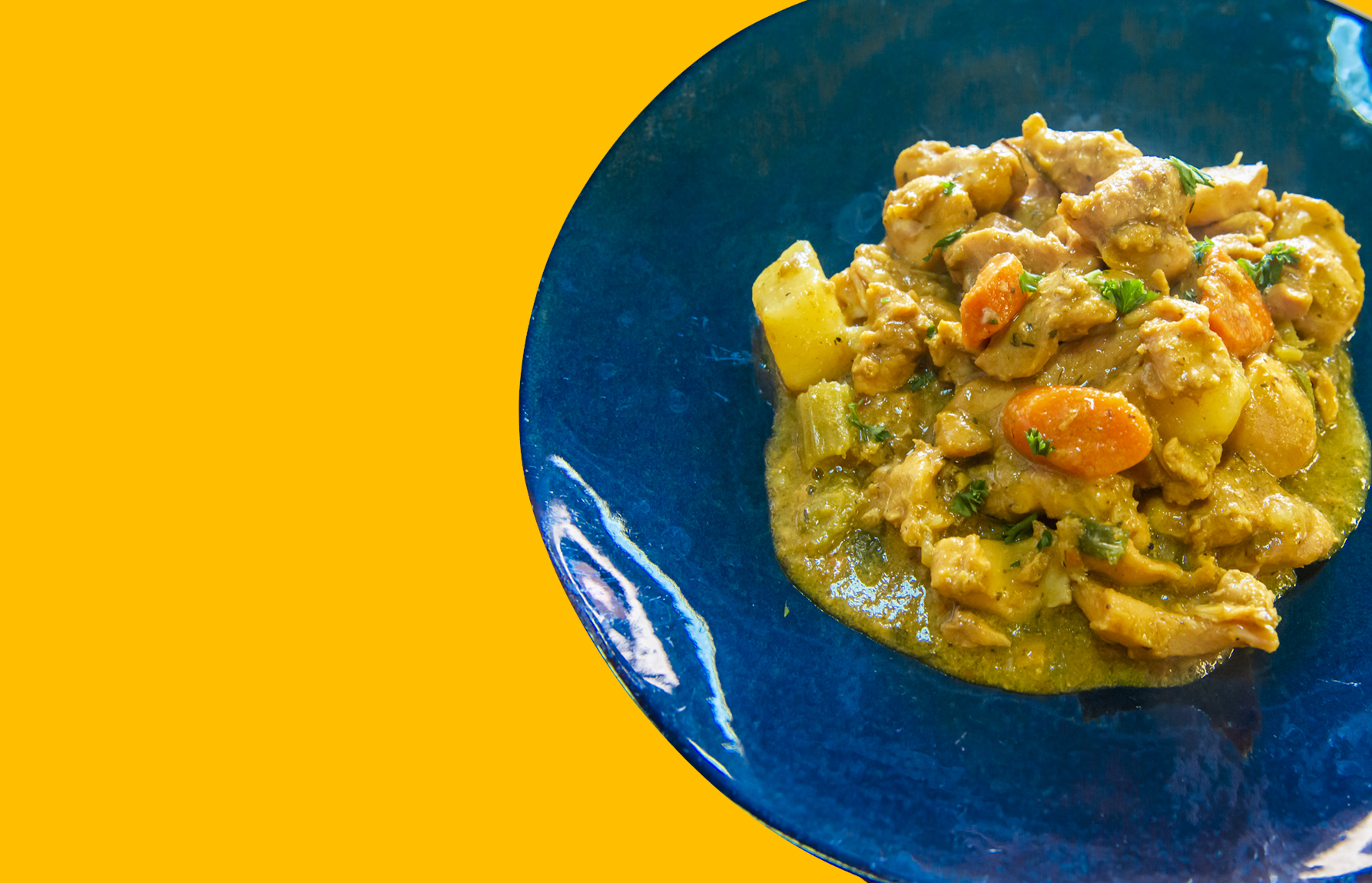
Some dishes win attention because they are dramatic. Brown stew chicken wins affection because it is dependable, fragrant, and deeply satisfying. Chicken is seasoned, often browned first, then simmered with onions, peppers, tomatoes, thyme, garlic, and spices until the sauce thickens around it. Browning sauce gives the dish much of its color and part of its flavor identity, adding a bittersweet edge that distinguishes it from a standard chicken stew.
This is the sort of food that anchors home cooking. It appears at family tables, lunch counters, and takeout spots because it travels well from pot to plate without losing its appeal. A great brown stew chicken has a sauce with depth but not heaviness. The chicken should absorb seasoning to the bone. Potatoes sometimes appear, and when they do, they should take on the gravy rather than dilute it.
For someone new to Jamaican food, this is one of the smartest dishes to order. It is familiar enough to feel approachable but distinct enough to show what the cuisine does with seasoning and technique.
Patties, coco bread, and the genius of eating on the move
No conversation about Jamaican food is complete without the patty. The pastry is golden, flaky, and often colored with turmeric or curry, while the filling ranges from seasoned beef to chicken, vegetable, shrimp, or ackee. The classic beef patty remains the reference point. It should be savory, moist, and assertively seasoned, with a crust that shatters a little but still holds together in the hand.
There is an art to the proportion. Too much filling and the pastry becomes soggy. Too little and it feels mean. A good patty should taste complete in a few bites, as though someone edited the idea down to its essentials. It is quick food, but not careless food.
Then there is coco bread, soft and slightly sweet, often split open to hold the patty. Eating a patty inside coco bread is one of those combinations that sounds excessive until you try it and wonder why every portable savory snack is not built this way. The pastry brings spice and richness. The bread adds softness and a little cushion. For schoolchildren, workers, and travelers, it has long been a practical meal. For everyone else, it is a smart reminder that pleasure does not always require ceremony.
Callaloo, a dish that shows the vegetable side of the cuisine
The global reputation of Jamaican food often leans so heavily toward meat and spice that people overlook the vegetable dishes. Callaloo deserves better. Made from leafy greens, typically the amaranth plant in Jamaica, callaloo is sautéed or steamed with onion, garlic, scallion, thyme, tomato, and sometimes Scotch bonnet. Saltfish may be added, though not always.
The finished dish can be soft and silky or retain a little texture, depending on the cook. Either way, it offers a savory depth that makes it more than a token green on the plate. With breakfast, it works alongside fried dumpling or boiled green banana. With dinner, it can support fish or chicken without disappearing under stronger flavors.
Callaloo also speaks to the practical intelligence of Jamaican cooking. The cuisine is excellent at making vegetables feel central rather than obligatory. The greens are not there to check a box. They are there because they taste good and because the meal is more complete with them.
Bammy, festival, and the starches that make the plate make sense
One of the easiest mistakes visitors make is underestimating the supporting cast. Jamaican starches are not neutral fillers. They shape how the meal lands. Bammy, made from cassava, is a flatbread with indigenous Taíno roots that still holds an important place, especially with fish. It can be soaked lightly and fried or steamed, developing a texture that is chewy, tender, and ideal for catching sauces.
Festival, by contrast, is lightly sweet, fried dough, crisp outside and soft within. With spicy fish or smoky jerk, that hint of sweetness is not random. It is strategic. The same goes for boiled green bananas, yams, and roasted breadfruit, all of which bring their own starch profile and flavor rather than fading quietly into the background.
You understand a Jamaican meal more fully when you stop treating these items as interchangeable. Escovitch with bammy lands differently from escovitch with festival. Jerk pork with roasted breadfruit gives a different kind of satisfaction than jerk chicken with rice and peas. These details are not fussy. They are the architecture of the plate.
Soup as sustenance, ritual, and remedy
Jamaican soups deserve more attention than they usually receive in quick overviews of the cuisine. Pepper pot soup, red peas soup, chicken foot soup, mannish water, and fish tea each bring different textures and purposes. Some are hearty enough to stand in for a meal. Others are clear and restorative. Many are tied to Saturday cooking or community gatherings.
Fish tea is especially interesting because the name leads some people to expect something delicate and restrained. A proper fish tea can be light in appearance but full in flavor, with fish, herbs, and pepper coming together in a broth that feels both clean and fortifying. Red peas soup, thickened with legumes and often enriched with dumplings and meat, is another matter altogether, substantial enough to border on stew.
Soup in Jamaica is rarely https://elliothjne921.northcrestbrief.com/posts/the-most-delicious-jamaican-food-you-need-to-taste an afterthought. It is often where thrift, technique, and flavor concentration meet. Cooks use bones, provisions, herbs, and time to create dishes that satisfy in ways expensive cuts sometimes do not.
What to notice when you try Jamaican food for the first time
There is a tendency to focus only on heat, especially in tourist conversations. Heat matters, but it is not the best lens. What is more useful is to notice how often Jamaican food balances one strong element with another. Smoke is matched with sweetness. Richness is checked by acidity. Salt is softened by starch. Herbs keep deep stews from feeling dull. Scotch bonnet contributes fruitiness as much as fire.
That balance is why the cuisine holds attention over a full meal. You can eat jerk, then a bite of festival, then a forkful of rice and peas, then some callaloo, and the plate keeps refreshing itself. The meal is not monotone. It moves.
It also helps to pay attention to texture. Jamaican cooking is full of it. Crisp fish skin against pickled vegetables. Flaky pastry around spiced beef. Creamy ackee beside firm saltfish. Thick oxtail gravy soaking into rice. Texture is not incidental. It is part of the pleasure.
The best way to experience it
The strongest Jamaican meals are often found in places where the food is made for people who already know what it should taste like. That might be a home kitchen, a community event, a modest lunch spot with steam trays, or a roadside grill sending smoke into the evening air. Fancy dining rooms can serve excellent Jamaican food, but polish is not a guarantee of depth.
If you have the chance, order beyond the obvious. Get the jerk, certainly, but also try the ackee and saltfish, the escovitch fish, the curry goat, the callaloo. Taste the starches with as much attention as the proteins. Ask which dishes are especially good that day. Jamaican cooking often reveals itself through what is fresh, what has had time to simmer, and what the kitchen takes pride in at that moment.
That is the real draw of Jamaican food. It is not only bold. It is thoughtful. Beneath the spice and smoke sits a cuisine built on memory, adaptation, and exacting common sense. The classics endure because they are delicious, but also because each one says something specific about the island, its history, and the people who keep these dishes alive. Once you understand that, the meal stops being a checklist of famous plates and becomes what it should be, an experience with depth, place, and personality.
Reggae Pot Jamaican Grill
2243 S Monaco St Pkwy #104
Denver, CO 80222
+1 720-410-2956
FAQ About jamaican food
What is the best Jamaican food to try in Denver?
The best choice depends on your tastes. Popular options include jerk chicken, curry goat, slow-cooked oxtail, and savory patties. Reggae Pot lists these dishes on its menu, with sides such as rice and peas and plantains. Ask the Denver team about current availability and spice levels.
Is Jamaican food very spicy in Denver?
Heat varies by dish and preparation. Jerk seasoning often includes scotch bonnet peppers alongside herbs and allspice, while other dishes may have gentler seasoning. Ask about the heat of the specific dish and any sauce before ordering.
What are some popular Jamaican snacks?
Jamaican patties are a popular snack made with flaky pastry and savory meat or vegetable fillings. Other options include fried dumplings and festival, a sweet fried dough often served with savory dishes. Availability varies, so check the current menu when ordering.